This article contains affiliate links: if you buy through them we may earn a commission, at no extra cost to you. Read our affiliate disclosure.
The best slides are the ones that come out every sunny weekend: unrolled at the sandbar, pumped up in minutes, and ready for another long afternoon of kids splashing off the side. A little boat slide maintenance is what keeps yours that way for many summers instead of one.
This guide covers the ten-minute routine after each outing, a quick check before every trip, cleaning, finding and patching leaks, off-season storage, care for fixed fiberglass slides, and when it’s time to replace a slide.
After every outing: the ten-minute routine
Most wear happens between trips, not during them. Sand, salt and a damp roll-up do more damage than a hundred happy runs.
- Rinse it with fresh water. Get sand, grass and algae off the surface, and rinse straps, buckles and valves too. After a day in saltwater, this step matters most.
- Let it dry. Air-dry the slide before you roll it, or unroll it at home the same day if you had to pack it wet.
- Deflate and roll it toward the valve. Many 12V pumps also deflate, which gets the air out faster and helps it roll tight.
- Stow it out of the sun. Under a seat, in a large dry bag or indoors. Most slides don’t include a storage bag, so a dry bag is worth adding.
Your pre-trip inspection checklist
Take two minutes before you leave the dock. It’s also a safety check, because a soft slide or a slipping strap is no fun with riders on it.
- Seams: look for lifting edges, bubbles or thin spots, especially where the slide bends.
- Valves: caps present, seals clean and free of sand.
- Sliding surface: no tears, sharp debris or rough patches.
- Straps and buckles: no fraying, cracks or stiff, sun-worn webbing.
- Pump and adapter: packed, working and the right fit for your valve.
- Repair kit: in the bag, with patches that match your slide’s material.
Cleaning your slide the right way
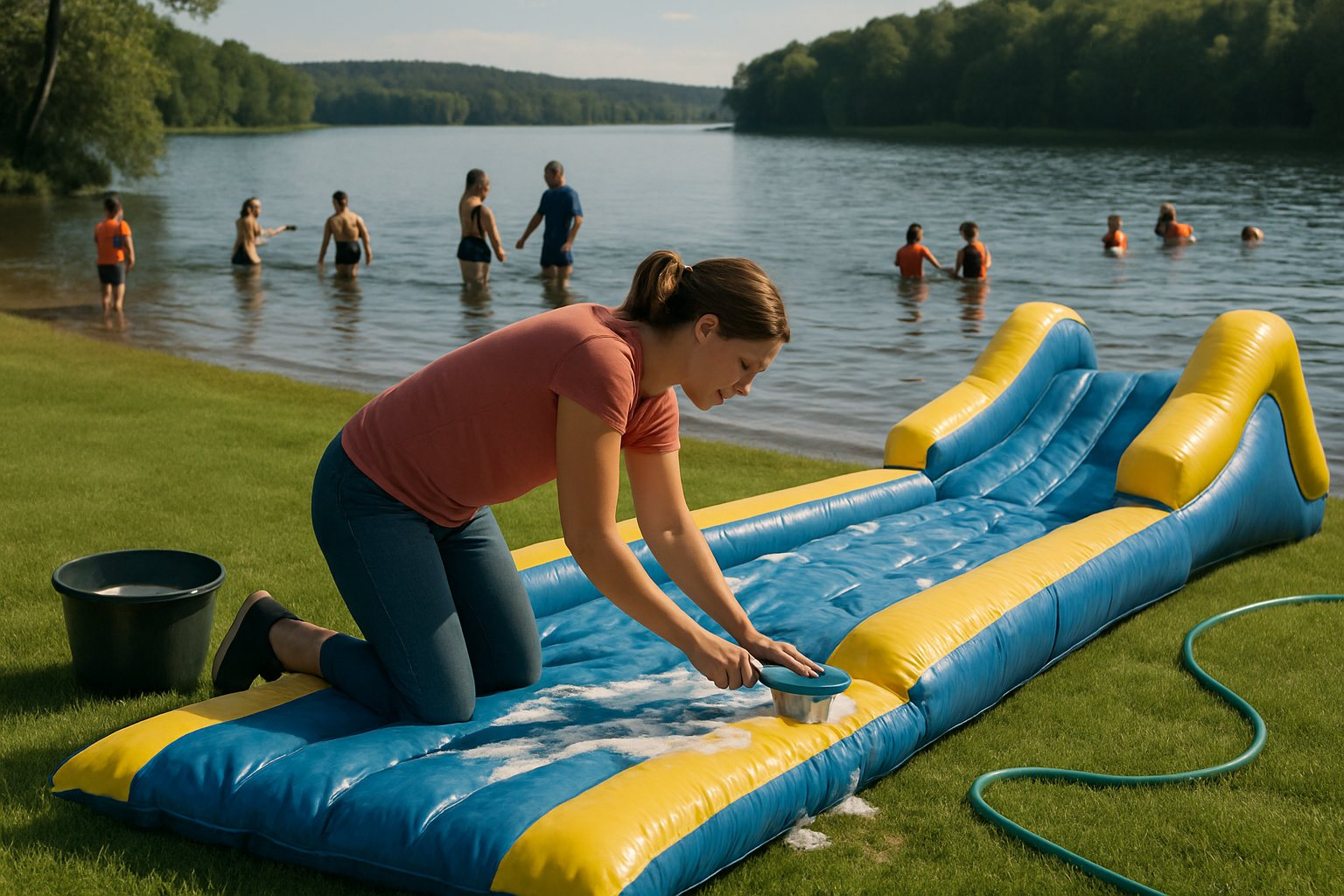
Gentle is the rule. Use fresh water, a mild soap and a soft brush or cloth. Harsh chemicals, solvents and stiff scrubbers can damage the vinyl or PVC and wear away the surface that makes the slide fast.
- Clean green film and algae off soon; it gets slippery on the climb and harder to remove with time.
- Rinse all the soap off so it doesn’t leave a residue.
- Dry folds and corners well, since that’s where mildew starts.
- If your slide’s maker recommends a specific cleaner or protectant, use that and skip the rest.
Finding and patching leaks
If your slide goes soft over an afternoon, it’s usually a valve or a small hole. Check the valve first: clean the seal and make sure the cap is tight.
- Inflate the slide firm on a clean surface.
- Brush or spray soapy water over seams, valves and any suspect spot. Bubbles show the leak.
- Mark it, deflate, and let the area dry completely.
- Patch it following the instructions in your slide’s repair kit, then give the patch the full cure time before you inflate.
Leaks along a welded seam, or in a drop-stitch slide like Slide Island, are best handled with the maker’s guidance or repair service. A patch on a high-stress seam may not hold.
Straps, valves and the pump
The small parts fail before the slide does, and they’re the easiest to look after. Rinse straps and buckles with fresh water and let them dry in the shade, since webbing left in the sun all season gets stiff and weak. Replace a frayed strap rather than knotting it.
Keep valve caps on whenever the slide is stored, so sand and grit stay out of the seal. Wipe the pump and its hose fitting dry, store the valve adapters in a small bag clipped to the pump, and check that the pump still runs before the first trip of the season. Some RAVE owners report trouble with the pump hose fitting, so it’s worth a look.
Off-season storage
At the end of summer, give the slide a proper clean, dry it completely and do a full inspection, so you know what needs fixing before next season instead of finding out at the lake.
- Store it deflated, rolled loosely and dry.
- Keep it somewhere cool and dry, out of direct sun, away from sharp tools and rodents.
- Avoid spots that get very hot, like a closed boat in summer sun or a hot attic.
- Store the pump, adapters and repair kit with the slide so everything is together in spring.
Caring for a fixed fiberglass slide
Rigid slides on double-deck pontoons, like the 10 ft fiberglass slide package from J’s Upper Decks, need a different routine. Rinse the surface after use, clean it with a mild soap, and check the mounting hardware and hand rails regularly. If anything is loose or corroded, fix it with the maker’s parts and instructions before anyone uses the slide again. A cover during the off-season keeps it cleaner.
Repair or replace?
Repairing a good slide is better for your wallet and creates less waste than buying a new one. Replace it when it no longer holds air after repairs, seams are separating, the sliding surface is badly worn, or straps and anchor points can’t be safely replaced. When it’s done, check whether your town accepts PVC for recycling.
Buying for the long haul? Material and construction make a difference in how a slide stands up to sun and use.
Durable slides worth looking after
RAVE Sports Pontoon Slide
- 9 ft sliding surface
- 200 lb, one rider
- 12V pump included
Airhead Spillway Pontoon Slide
- 1,000-denier reinforced PVC
- 8 ft sliding surface
- Bundle with 12V pump
Slide Island Boat Slide and Mat
- 10 ft 6 in drop-stitch slide
- 300 lb in slide mode
- Turns into a floating mat
- RAVE Sports Pontoon Slide: commercial-grade PVC, a 12-volt pump in the box, and it rolls up to about the size of a sleeping bag for easy storage.
- Airhead Spillway Pontoon Slide: 1,000-denier, UV-treated reinforced PVC with welded seams, the heaviest-duty material among the pontoon slides we compared.
- Slide Island Boat Slide and Mat: a 10 ft 6 in drop-stitch slide rated to 300 lb in slide mode, which doubles as a floating mat.
Check the Airhead Spillway price on Amazon
Compare all the options in our guide to the best pontoon boat slides, review the boat slide safety basics, and browse all our boat slide guides.
Boat slide maintenance questions
How do I clean my boat slide?
Rinse it with fresh water after each use, then wash grime off with mild soap and a soft brush or cloth. Avoid harsh chemicals, and let it dry fully before you roll it up.
Can I use my slide in saltwater?
Yes. Just rinse the slide, straps, buckles and valves with fresh water after the day so salt doesn’t dry on them.
How often should I inspect my slide?
Give it a quick look before every trip and a thorough inspection at the start and end of each season.
How do I fix a leak in an inflatable slide?
Find it with soapy water, let the spot dry, and patch it with the repair kit made for your slide’s material. For seam leaks or drop-stitch slides, ask the maker first.
How should I store a slide over the winter?
Clean it, dry it completely, deflate it and roll it loosely. Keep it somewhere cool and dry, out of the sun and away from sharp objects.
Should I use a UV protectant on my slide?
Only one your slide’s maker recommends. The surest protection is simple: keep the slide out of the sun when nobody is using it, and store it indoors between trips.