This article contains affiliate links: if you buy through them we may earn a commission, at no extra cost to you. Read our affiliate disclosure.
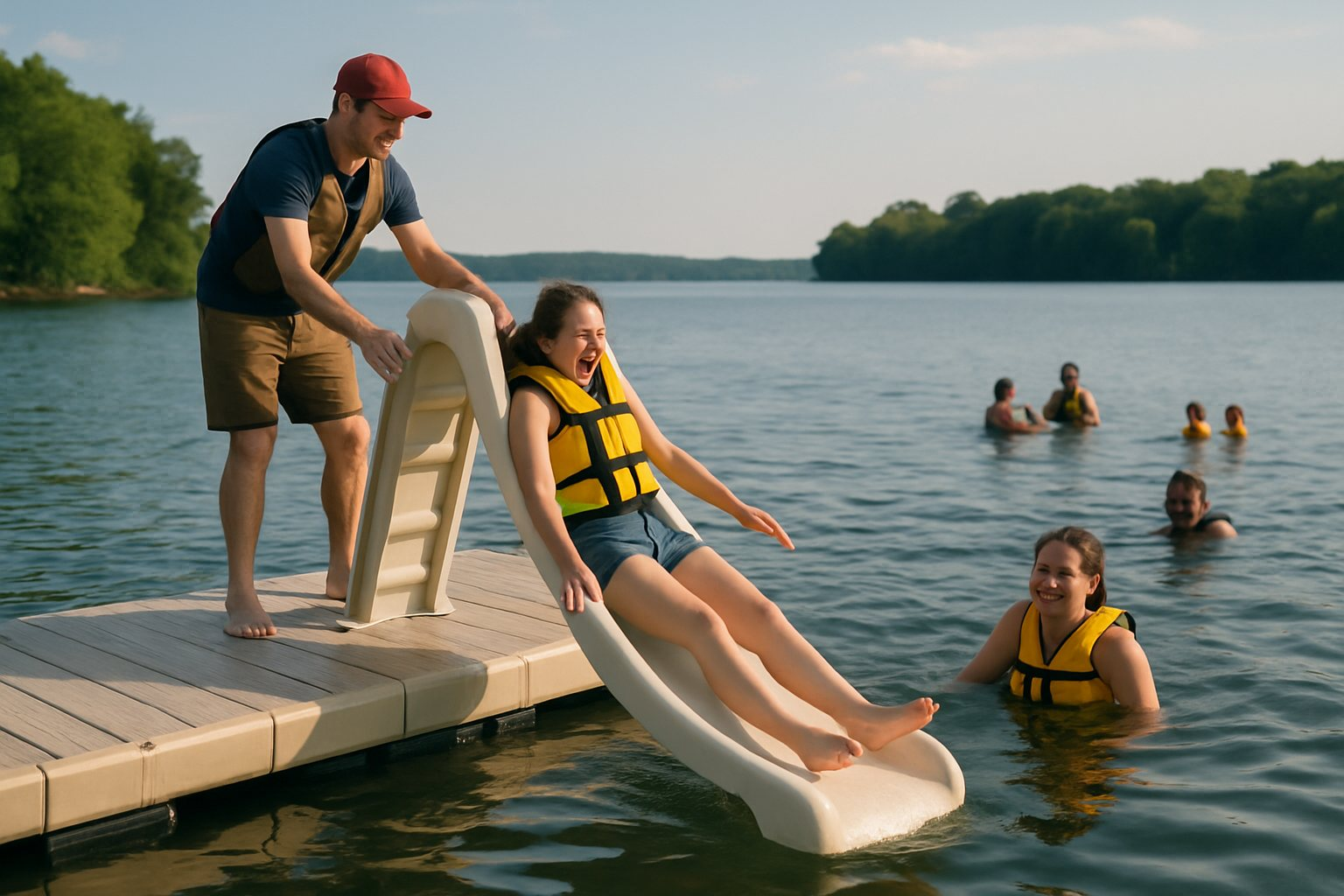
Picture the perfect slide day: anchored in a warm, quiet cove, the music low, kids lined up at the rail and grown-ups taking “just one more” turn. Good boat slide safety is what keeps that afternoon easy and carefree. None of it is complicated, and most of it takes a minute.
This guide covers the checks before you go, how to set up the boat and the water, house rules for riders, extra care for kids, when to call it a day, and what’s different on a pontoon rail versus a swim platform.
Before you leave the dock
A quick gear check at home saves you from finding a problem with a line of kids waiting.
- Look over the slide. Check seams, valves and the sliding surface for wear, leaks or sharp debris.
- Check straps and buckles. Replace anything frayed or cracked.
- Pack the pump and repair kit. Include the right valve adapter for your slide.
- Count life jackets. Make sure every child and weaker swimmer has one that fits.
- Know your numbers. Find your slide’s rider limit and minimum water depth in the manual.
Setting up the boat and the water
Anchor and switch the engine off
This is the one rule with no exceptions. Anchor first, turn the engine off, and keep it off while anyone is on the slide or in the water. Nobody uses a slide while the boat is moving.
Check the depth and the landing zone
Every slide needs a minimum depth at the landing. RAVE asks for at least 5 ft for its pontoon slide, and the Aquaglide Freefall at least 8 ft with 10 ft of clear space around the landing. Use the number for your slide, and check for rocks, stumps or sandbars below.
Keep the landing zone clear of swimmers, floats, ropes and the anchor line. Set mats and floating islands well off to the side.
Pick a quiet spot
Choose calm water away from channels and boat traffic. Wakes rock the boat and the slide, and swimmers are hard for other boaters to see.
If you’re bringing a floating mat or island too, tie it off well away from the slide and the boarding ladder. Swimmers drift toward floats, and you want them doing it outside the landing path.
House rules for riders
Say the rules once before the first run, especially to guests. Kids follow them better when everyone does.
- One rider at a time. Nearly every pontoon slide is rated for one person up to about 200 lb.
- Sit down, feet first. No standing, diving, flips or head-first runs.
- Wait for the all-clear. The next rider goes only when the person ahead has swum away from the landing.
- Swim clear, then climb out. Riders swim to the boarding ladder, not back toward the slide.
- No pushing or crowding at the top of the slide or on the ladder.
- Keep it wet. A dry vinyl slide is slow and can give riders rub burns, so splash water down between runs.
Kids and weaker swimmers
Children are the slide’s biggest fans, and they’re the ones who most need a watchful adult. Name one grown-up as the spotter. That person watches the slide and the water, not their phone, and hands the job over out loud when they take a break.
- Kids and anyone who isn’t a strong swimmer wear a properly fitted life jacket on the slide and in the water.
- There’s no single “right age.” Go by the child’s swimming, confidence and whether they’ll follow the rules.
- Slides with steps and handles, like the WOW Pontoon Zip Slide, make climbing up easier for small riders.
- Keep sunscreen and drinking water on hand. Long, happy afternoons in the sun add up.
When to pack up the slide
Stop sliding and bring everyone aboard if any of these happen:
- Thunder, lightning or a storm on the way.
- Strong wind, building chop or a current that pulls swimmers away from the boat.
- The anchor starts dragging and the boat drifts toward shallow water or traffic.
- The slide goes soft, a strap slips or you hear a leak.
Take the slide down before you move the boat. An inflated slide catches the wind and pulls on whatever it’s tied to.
Pontoon slides vs. swim platform slides
On a pontoon rail
Most pontoon slides strap to the side rail or fit over a gate opening, and each is made for a range of rail heights (the RAVE fits rails 21 to 30 inches high). Thin rails can flex, so pull the straps tight and check them before every session and again after the first few runs. Our pontoon slide installation guide shows the full setup.
On a swim platform
Slides like Slide Island tie to cleats, tow eyes or D-rings on a swim platform, so they work on boats without a pontoon rail. The same rules apply: anchor, engine off, check the depth and keep the landing clear. Swim platforms sit close to the stern, so be extra sure the engine is off. See more in our guide to the best inflatable boat slides.
Slides built with safety in mind
A slide made and rated for riders is your first safety feature. These three have clear rider limits and sensible designs.
RAVE Sports Pontoon Slide
- 9 ft sliding surface
- 200 lb, one rider
- 12V pump included
Airhead Spillway
- 8 ft sliding surface
- 200 lb, 1 rider
- 1,000-denier reinforced PVC
Slide Island Boat Slide and Mat
- 10 ft 6 in drop-stitch slide
- 300 lb in slide mode
- Turns into a floating mat
- RAVE Sports Pontoon Slide: rated for one rider up to 200 lb, with clear guidance on rail height (21 to 30 in) and water depth (at least 5 ft).
- WOW Pontoon Zip Slide: deluxe safety rails plus molded steps and handles for an easier climb, rated for one rider up to 200 lb.
- Slide Island Boat Slide and Mat: a 10 ft 6 in drop-stitch slide rated to 300 lb in slide mode that ties to a swim platform and turns into a floating mat.
Check the RAVE Pontoon Slide price on Amazon
Compare more options in our guide to the best pontoon boat slides, keep your slide in good shape with our boat slide maintenance tips, and browse all our boat slide guides.
Boat slide safety questions
How deep should the water be for a boat slide?
It depends on the slide. RAVE asks for at least 5 ft for its pontoon slide, and the Aquaglide Freefall at least 8 ft. Always use the number in your slide’s manual and check for hazards below.
Do riders need a life jacket on a boat slide?
Kids and weaker swimmers should always wear one. Strong adult swimmers can decide for themselves, but having life jackets ready for everyone is the easy, safe default.
Can adults use a boat slide?
Yes, within the rider limit. Most pontoon slides are rated for one rider up to about 200 lb, and Slide Island is rated to 300 lb in slide mode.
How old should kids be to use a boat slide?
There’s no set age. Go by swimming ability and whether the child will follow the rules, put them in a life jacket, and have an adult spotter watching every run.
Can a slide damage my pontoon?
A slide strapped as its maker intends, to a rail in the right height range, shouldn’t. Problems come from loose straps, the wrong attachment points, or leaving it inflated while the boat moves.
What should be on board for a slide day?
Life jackets that fit every child and weaker swimmer, the pump and repair kit, a bucket for keeping the slide wet, sunscreen, plenty of drinking water and a working anchor. Pick your spotter before the first run.