This article contains affiliate links: if you buy through them we may earn a commission, at no extra cost to you. Read our affiliate disclosure.
Every summer someone at the sandbar has the same idea: “We could build a slide off the pontoon ourselves.” It’s a fun thought on a lazy afternoon, with the kids already cannonballing off the deck. Before you head to the hardware store, here’s an honest look at a DIY pontoon boat slide: what you can make yourself, what you shouldn’t, and how to get the homemade feel without the risk.
Short version: a ready-made slide that’s rated for riders is the safer choice, and it often costs less than people expect. The fun DIY part is everything around it.
Should you build a DIY pontoon boat slide?
A slide looks simple, but it has a hard job. It has to hold a rider’s weight while it moves, stay fixed to a rail that wasn’t designed to carry it, stay slick without being dangerous, and drop people into water that’s deep enough and clear. Commercial slide makers design and rate their slides for that load. A homemade slide has no rating, and you only find its weak point when it gives.
That’s why we don’t publish plans or materials lists for a home-built rider slide. The risks are real and hard to test at home:
- Attachment. Pontoon rails can flex. A rigid homemade slide can pull on them in ways a strapped inflatable doesn’t.
- Load. You don’t know how much weight it will really hold, or for how long, once it’s wet and in the sun.
- Edges and fasteners. Anything sharp or exposed on a slide sits right where bare legs go.
- Angle and landing. Too steep, too short or aimed at shallow water, and a fun ride turns into a bad entry.
- Repurposed slides. A backyard playground slide isn’t made for a boat, a water landing or a wet surface. Leave it in the yard.
What a ready-made slide gives you
Almost every pontoon slide is inflatable. It straps to your side rail or gate, fills in about five minutes with a 12-volt pump, and rolls up small enough to stow under a seat. More importantly, it comes with things a homemade slide doesn’t:
- A rider limit. Nearly every pontoon slide is rated for one rider up to about 200 lb.
- A depth number. RAVE asks for at least 5 ft of water at the bottom, and the Aquaglide Freefall at least 8 ft.
- A fit range. The RAVE fits most pontoons with a railing 21 to 30 inches high, with straps made for it.
- Soft, forgiving materials. Inflated PVC with side rails is far kinder to elbows and knees than wood or metal.
They’re also easy to live with. Pontoon slides in our buying guide weigh from 17 to 32 lb, roll up when deflated, and come off the boat at the end of the day, so your rails and deck stay exactly as they were.
And it can cost less than a scratch-built project. We saw the WOW Pontoon Zip Slide at about $260 on sale and the O’Brien at about $280 in October 2026. See all the options in our guide to the best pontoon boat slides.
Slides we’d buy instead of building
RAVE Sports Pontoon Slide
- 9 ft sliding surface
- 200 lb, one rider
- 12V pump included
Airhead Spillway
- 8 ft sliding surface
- 200 lb, 1 rider
- 1,000-denier reinforced PVC
- RAVE Sports Pontoon Slide: the one most pontoon owners end up with. It has a 9 ft sliding surface, comes with a 12-volt inflator, and fits most rails 21 to 30 inches high.
- WOW Pontoon Zip Slide: the budget pick, with safety rails, molded steps and handles that make climbing up easier for kids.
- O’Brien Pontoon Slide: just 17 lb and 105 in long, easy to carry down the dock and to store on a smaller pontoon.
Update, October 9, 2026: the WOW Pontoon Zip Slide is currently unavailable on Amazon and is no longer listed in WOW’s own shop. The RAVE Sports Pontoon Slide and the Airhead Spillway on this page are similar pontoon slides that were in stock when we checked.
DIY projects that make your slide better
If you love a weekend project, put that energy into everything around a rated slide. These are low-risk and make a real difference on the water.
Your own setup routine
Practice inflating and strapping the slide at the dock until it’s a five-minute job, then write the steps on a card that lives with the slide. Our pontoon slide installation guide has the full routine.
A way to keep it wet
A dry vinyl slide is slow and can give riders rub burns. A bucket on a rope works, and kids love being the “water crew.” Keep anything you rig simple, off the sliding surface and away from the rider’s path.
A storage kit
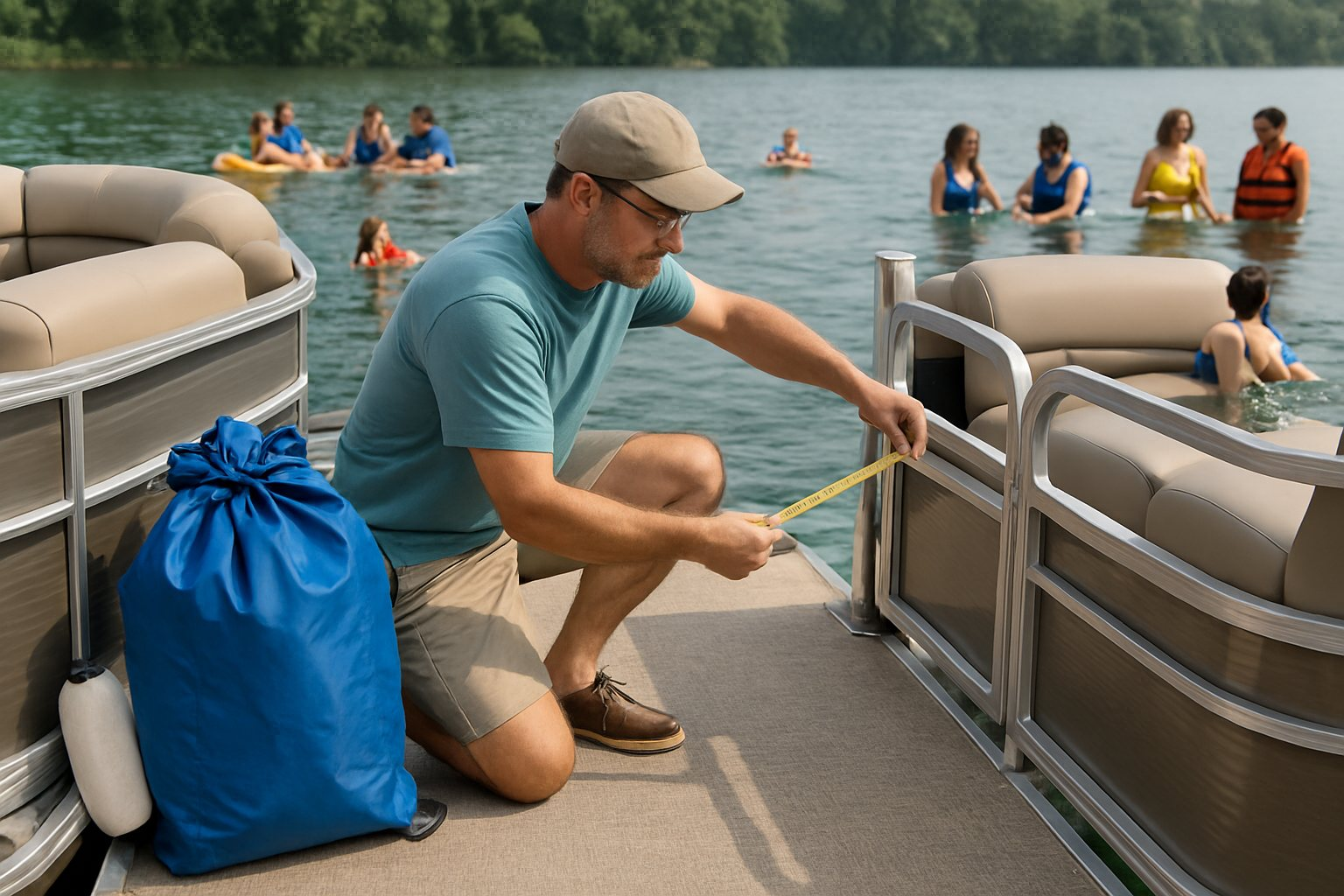
Most slides don’t come with a storage bag. A large dry bag with the pump, valve adapters and a repair kit inside means the whole setup grabs-and-goes.
A landing zone that’s part of the fun
Set a floating water mat or a floating island off to the side, well clear of the landing, as the spot where riders swim to and hang out between turns.
Want something more permanent?
If what you’re really after is a “built-in” slide, the right path is a kit made for pontoons, not a scratch build. On boats with an upper deck, J’s Upper Decks sells a 10 ft fiberglass slide package with mounting hardware and two hand rails for about $1,900 plus shipping, with an optional water spout. Some builders, such as Bennington on its “Top Deck” models, offer a factory slide.
Install it exactly as the maker says, with the hardware it supplies, or have a dealer do it. That’s still a DIY-friendly project for a handy owner, just with a design someone has already engineered.
Safety basics for any slide
- Anchor and switch the engine off before anyone slides or swims.
- Check the depth your slide’s manual asks for, and keep the landing zone clear.
- One rider at a time, sitting and feet first, within the rider limit.
- An adult watches the slide; kids and weaker swimmers wear life jackets.
- Pack up in strong wind, current or storms, and stay away from boat traffic.
More in our boat slide safety guide, and see all our pontoon boat slide guides.
DIY pontoon slide questions
Can I build my own pontoon boat slide?
You can, but we don’t recommend it. A homemade slide has no rider rating, and attaching it safely to a pontoon rail is harder than it looks. A ready-made slide rated for riders is the safer choice.
Is a DIY slide cheaper than buying one?
Often not by much. Full-size inflatable pontoon slides started around $260 to $280 when we checked in October 2026, and they include straps, rails and a rider limit.
Can I use a playground slide on my boat?
No. Playground slides aren’t made to attach to a boat, to be used wet, or to drop riders into water. Stick with a slide made for pontoons.
What’s the best DIY upgrade for a pontoon slide?
A grab-and-go storage kit and a fast setup routine. Together they turn the slide from “maybe later” into something you set up every trip.
Can I add a permanent slide to my pontoon?
Yes, if your boat has an upper deck. Use a fiberglass slide kit made for pontoons with its own mounting hardware, and have a dealer install it if you’re unsure.
How do I make my pontoon slide faster?
Keep it wet. A dry vinyl slide is slow and can give riders rub burns, so splash a bucket of lake water down it between runs. Design matters too: one owner noted the WOW Waterfall Slide doesn’t slide as fast because of its support fabric.